True Nature Media
150 Years Later, I Went Back
One hundred and fifty years after my Volga German ancestors arrived in Kansas, I returned to Hays to walk in their footsteps and discover the stories they left behind. Along the way, old photographs found new meaning, strangers became family, and the past suddenly didn't feel so far away. Filled with history, laughter, and a few surprises, my time in Kansas reminded me why this place will forever have a piece of my heart.

What I found when I returned to my family's Kansas roots
Some places have a way of pulling us back. For me, one of those places is Ellis County, Kansas, where my family's American story began generations ago.
In September 1876, my Volga German ancestors left Russia to begin the long journey to America. They crossed the Atlantic aboard the SS Gellert of the Hamburg-American Line, a modern steamship that made the crossing in just 15 days. They arrived in New York on October 26. Less than a week later, on November 1, 1876, they reached Hays, Kansas, ready to begin a new life on the prairie.
This summer, nearly 150 years later, I went back. I spent several weeks in Hays writing, exploring, reconnecting with people, places, and pieces of my family's past. Along the way, I found new cousins, old photographs, plenty of surprises—and a connection to a place that still feels a little like home.
My ancestors were Volga Germans—Germans who had settled along Russia's Volga River beginning in the 1760s. For generations, they farmed while holding tightly to their German language, traditions, and faith. By the 1870s, freedoms they had been promised were disappearing. Many made the difficult decision to leave Russia and start over.
Can you imagine leaving everything behind, crossing an ocean, and arriving on the Kansas prairie just as winter approached? Newcomers in an unfamiliar land, they spoke no English, knew no one, yet they persisted. They came hoping for the freedom to worship, preserve their traditions, and build a life of their own. Build they did.
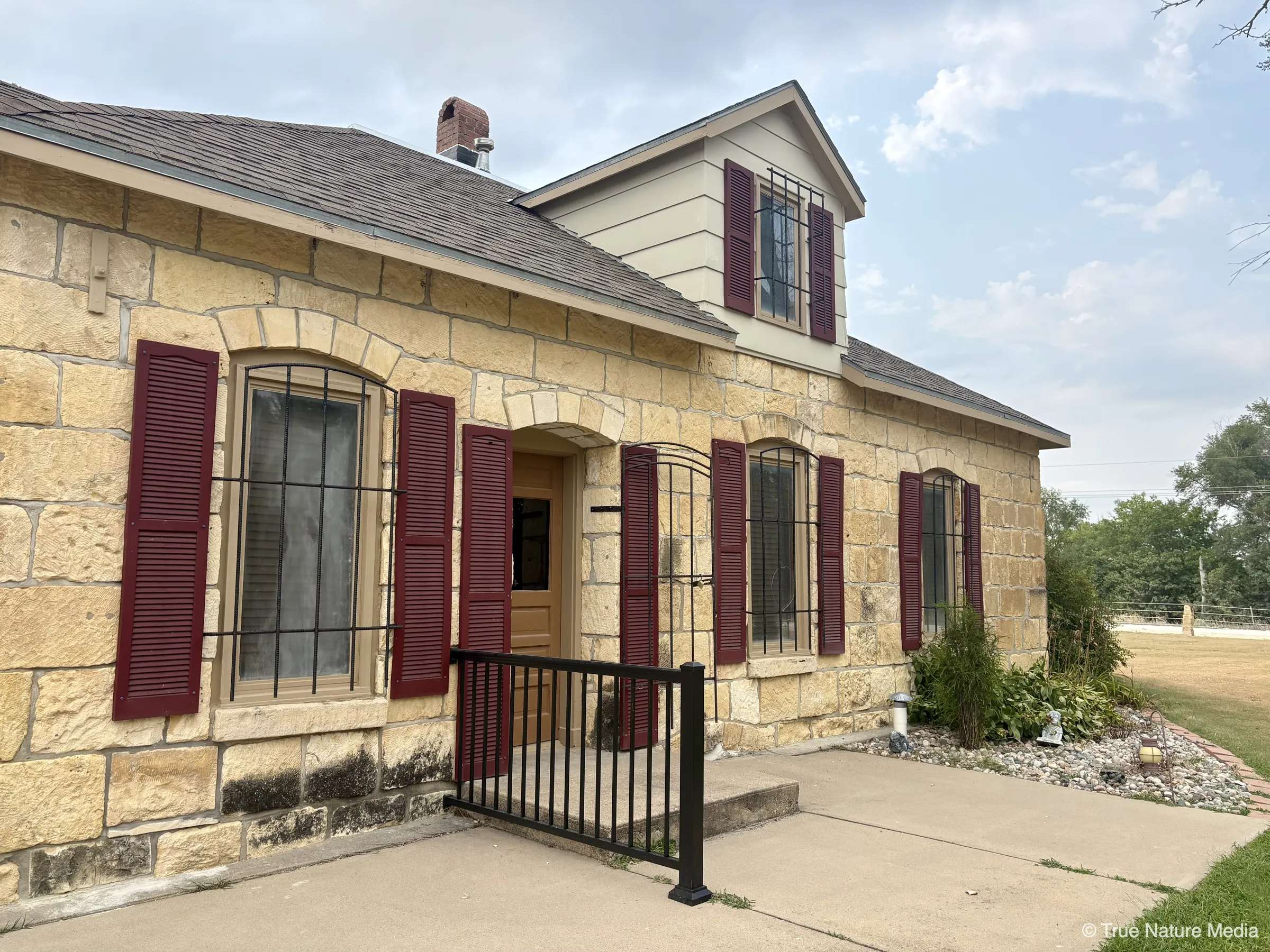
My great-great-grandfather, Jakob Meier, built the first grist mill in Ellis County. After floods destroyed the mill, some of its limestone blocks were later used to build a house on the family farm—the house where my father was born and my grandparents raised their family.
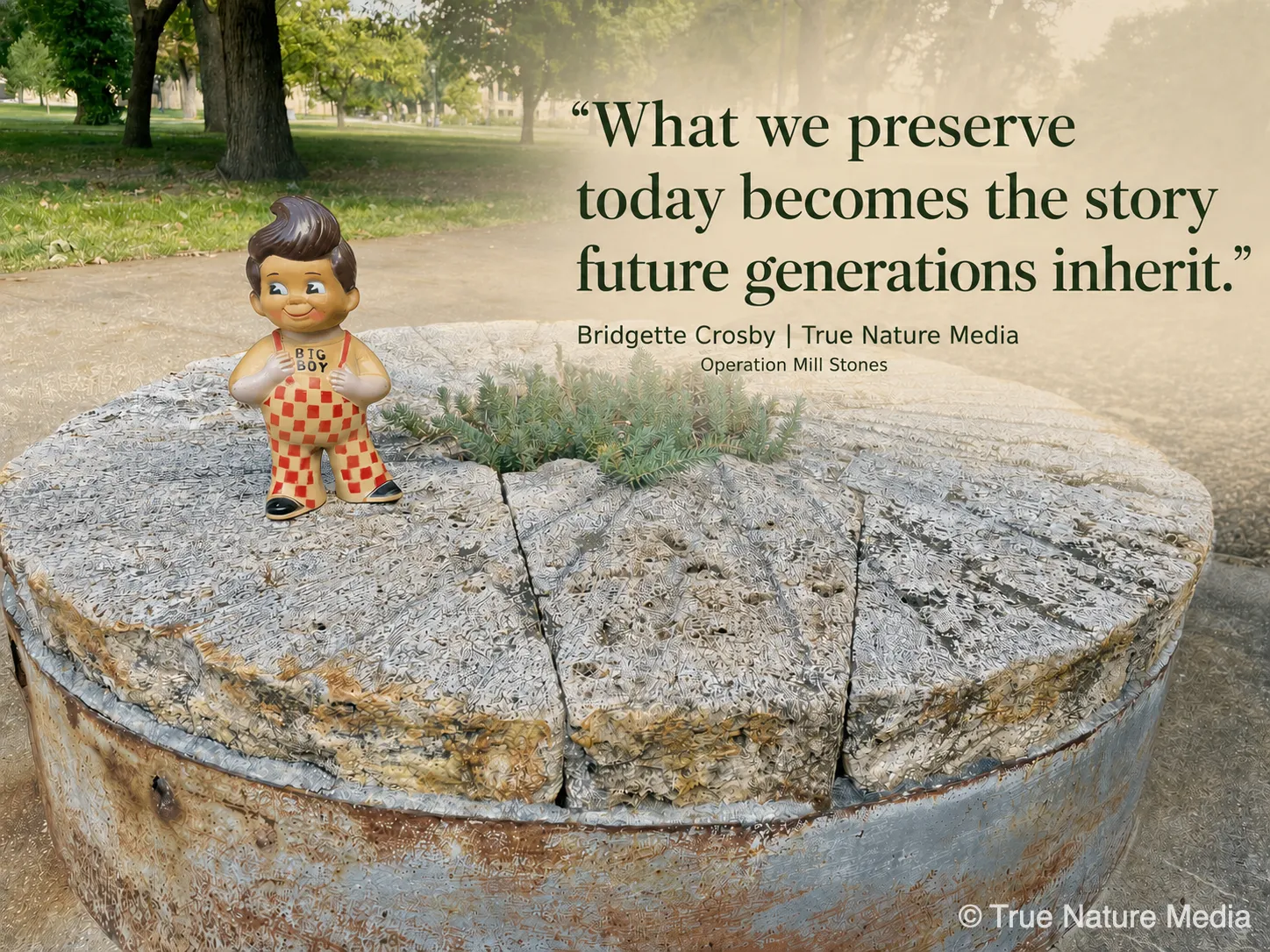
Four of the original millstones still survive, and today they're at the heart of Operation Mill Stones, my effort to preserve them for future generations. History really can be written in stone. If you'd like to learn more or join the preservation effort, I invite you to connect with me, and I would be happy to share our mission and updates.
When an Old Photograph Finds Family
I was also in Hays for a very special reason. I was honored to speak at the 56th Annual American Historical Society of Germans from Russia International Convention, where I presented “Creative Roots: Carrying Forward Volga German Art, Music and Writing,” a True Nature Heritage Project. I was honored to share my family's history through writing, art, music, photographs, poetry, and storytelling.
I also read one of my grandmother's poems to the audience, and you could have heard a pin drop. Who knew that one day her granddaughter would share a poem she wrote with an international audience? Another favorite moment was getting everyone to sing along to ‘Take Me Home, Country Roads.’ In a room full of people reconnecting with their roots, it felt pretty fitting.
Then came a surprise I never expected. After my presentation, an older gentleman approached me holding the same family photograph I had just shown the audience. We compared our family histories and, to our surprise, discovered we share the same great-grandfather. There we were, generations later, brought together by an old photograph.
He wasn't my only surprise. By the time I left Kansas, I had met at least 10 cousins I didn't even know I had. It all started with organizing family history records I'd collected over my lifetime. I also contacted cousins that I already knew and invited them to join me at the convention. This was my second solo trip to Hays, and while I was there, I explored church records and census data. I also connected with the Ellis County Historical Society, which will help us move the millstones. At the convention, I compared family trees with other attendees and shared old photographs.
Bit by bit, names and faces became new branches on my family tree, along with real connections to living relatives. Somehow, my long-lost cousin and his friend adopted me along the way, too! I caught up with old friends, made new ones, ate plenty of German food, and enjoyed several days filled with music, traditions, family history, and laughter. It felt less like studying history and more like stepping right into it.
A Little Polka and Gurkensalat
Fortunately, family history doesn't have to be all names, dates, and dusty records. There was plenty of music, food, and laughter, and I even learned how to polka! My new cousin and his friend took me to Meridy's in nearby Russell, where I enjoyed a creamy cucumber salad that brought back a familiar taste of family.
Gurkensalat, a traditional German cucumber salad, has long been one of my favorite family recipes. Our version is creamy, made with thinly sliced cucumbers, sweet onions, sour cream, a splash of vinegar, a little sugar, and plenty of fresh dill. My grandmother always said to let it chill so the flavors could come together.
That's one of the things I love about old family recipes. They don't just feed us; they connect us. A dish made in your own kitchen can carry memories, traditions, and little pieces of family history from one generation to the next. Sometimes history isn't tucked away in an archive or carved into an old millstone. Sometimes it's sitting right there on the dinner table.
Somewhere between the new cousins, polka music, and delicious food, the distance between past and present didn't seem quite so great. That's what I love about family history. It's more than names on a family tree. It's the food our families cooked, the songs they sang, the language they spoke, the traditions they carried, and the places they called home.
150 Years of Freedom
This fall marks 150 years since my family came to America. Without their brave decision to leave everything behind, we would not enjoy the freedoms we have today.
Family, Faith, and Freedom mean everything to me, and I want to make sure future generations of our family understand what those freedoms mean. I will celebrate by preparing a traditional German Dinner and my own mini Oktoberfest.
My ancestors may never have imagined that generations later, one of their great-great-granddaughters would return to Hays looking for traces of the life they built—and then work to move and preserve what they left behind. I am working hard to preserve our family history and heritage for future generations, and I hope they would be proud!
Maybe that's why preserving our history matters: the things we save become the stories someone else gets to discover. Whatever your heritage may be, I hope you'll take some time to explore it.
Ask questions, learn the recipes, look through old photographs, turn up the music, try the food, and visit the places your family once called home. If someone asks you to polka, give it a try. And when you uncover a story or family tradition worth remembering, share it. You never know who might be searching for the same story.
Embrace, Celebrate, and Cherish your heritage. Knowing where we came from helps us carry a little piece of the past forward.
I went back looking for pieces of my family's past and came home with new cousins, new friends, and memories I'll treasure. Somewhere along the way, Kansas became more than a place in my family history. It became a place I know I'll return to. I can't wait to go back.


